At Herrington Harbour, we maintain a distinct focus on the environment, and it permeates beyond…
Local Wildlife Spotlight: Dragonflies
 If you read and enjoyed our previous article on forest interior dwelling birds, you’re in luck! As a continuation of our endeavor to spread knowledge about local wildlife and conservation efforts, we bring you another spotlight article. Today’s topic: dragonflies! These creatures are more than just pretty bugs- they’re an important part of the life cycle of marine wetlands, as we have here in Herrington Harbour.
Unique and Colorful
Dragonflies are an iconic species of insect on account of their unique shape and often brilliant coloring. They play a key role in the ecology of the Chesapeake Bay, living in wetland environments and taking part in the life cycle. Dragonflies and their larvae eat flies, mosquitoes, moths, and the larvae of other insects and even small fish. In turn, they are a yummy snack for frogs, birds, and spiders.
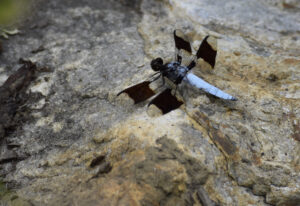
Along the shores of the Chesapeake Bay, many species of dragonflies thrive. Some are called darners, others skimmers or bluets. Two common types are the green darner and the twelve-spot skimmer. The green darner is large, sometimes over three inches long, with large transparent wings, a green thorax, and a blue or purple abdomen. The twelve-spot skimmer is smaller and brown, and gets its name from the three brown spots on each of its four wings.
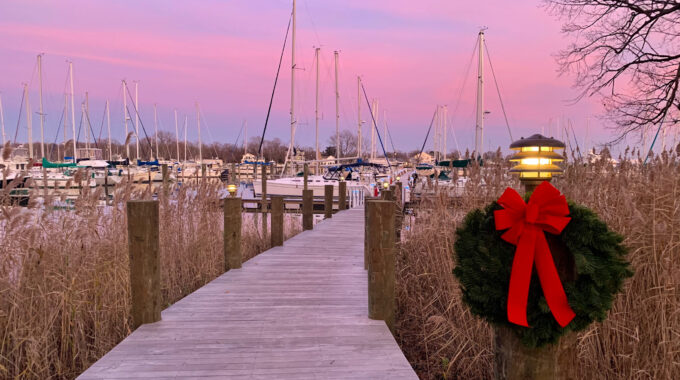
Wetland environments are often degraded by industry through conversion into farmland or industrial space. At Herrington Harbour South, we have a wetlands restoration project on our south banks, where tall grasses and shallow waters create a natural habitat for insects like the dragonfly. Next time you take a walk down the docks on the south side of the marina during spring, summer, or fall, count the number of dragonflies you see!
Written by Rebecca Corey, Herrington Harbour South
Related Posts